Tune the tone
to match
your tinnitus.
Find the pitch of your ringing, play it for a minute, and notice the quiet that follows. Then track what works for you.
Free on iPhone. No account.
Designed to complement care from a hearing professional. Not a medical device.
What it does
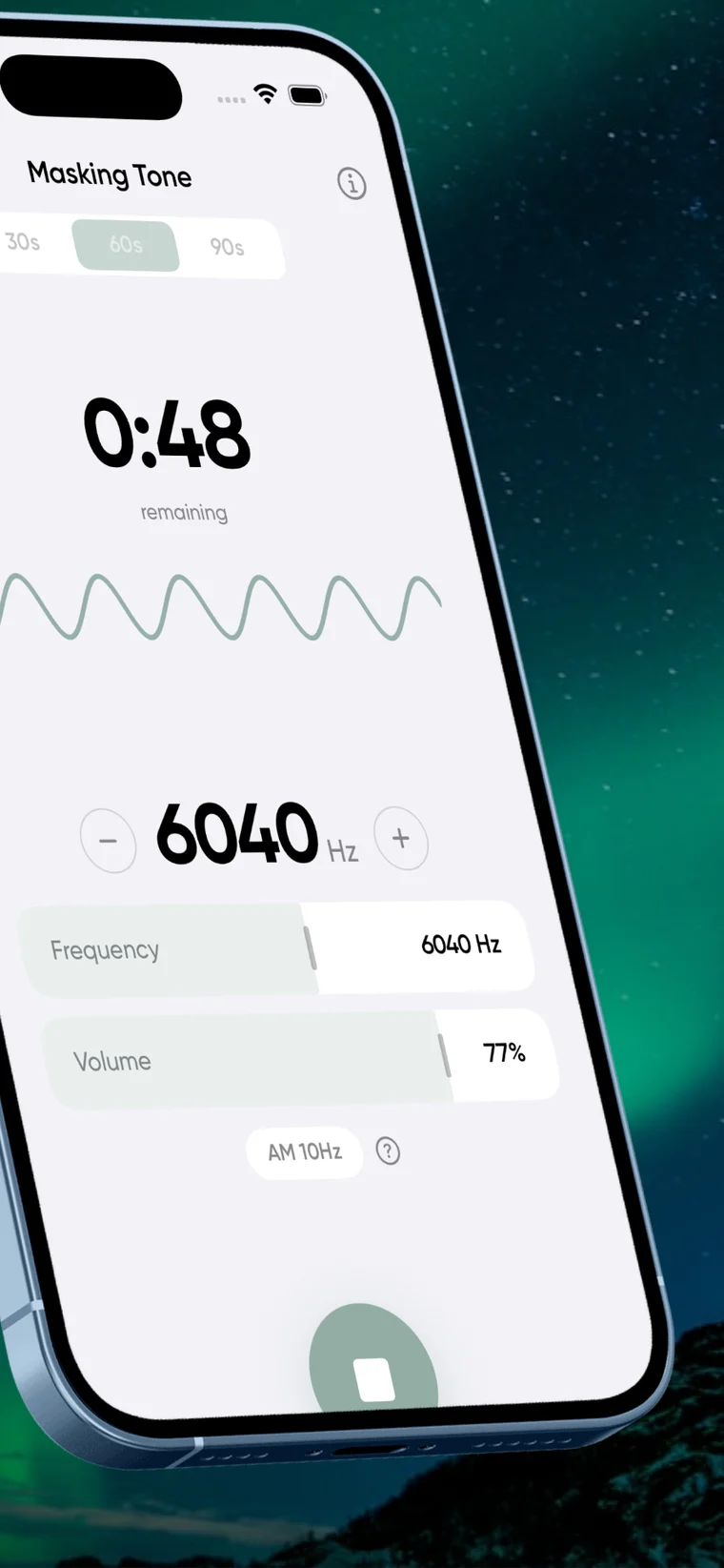
Three controls.
Match your frequency
Sweep from 1 kHz to 12.5 kHz and lock onto the tone that overlaps your ringing.
30, 60, or 90 seconds
Short sessions of 30, 60 or 90 seconds, with a 10-minute rest in between.
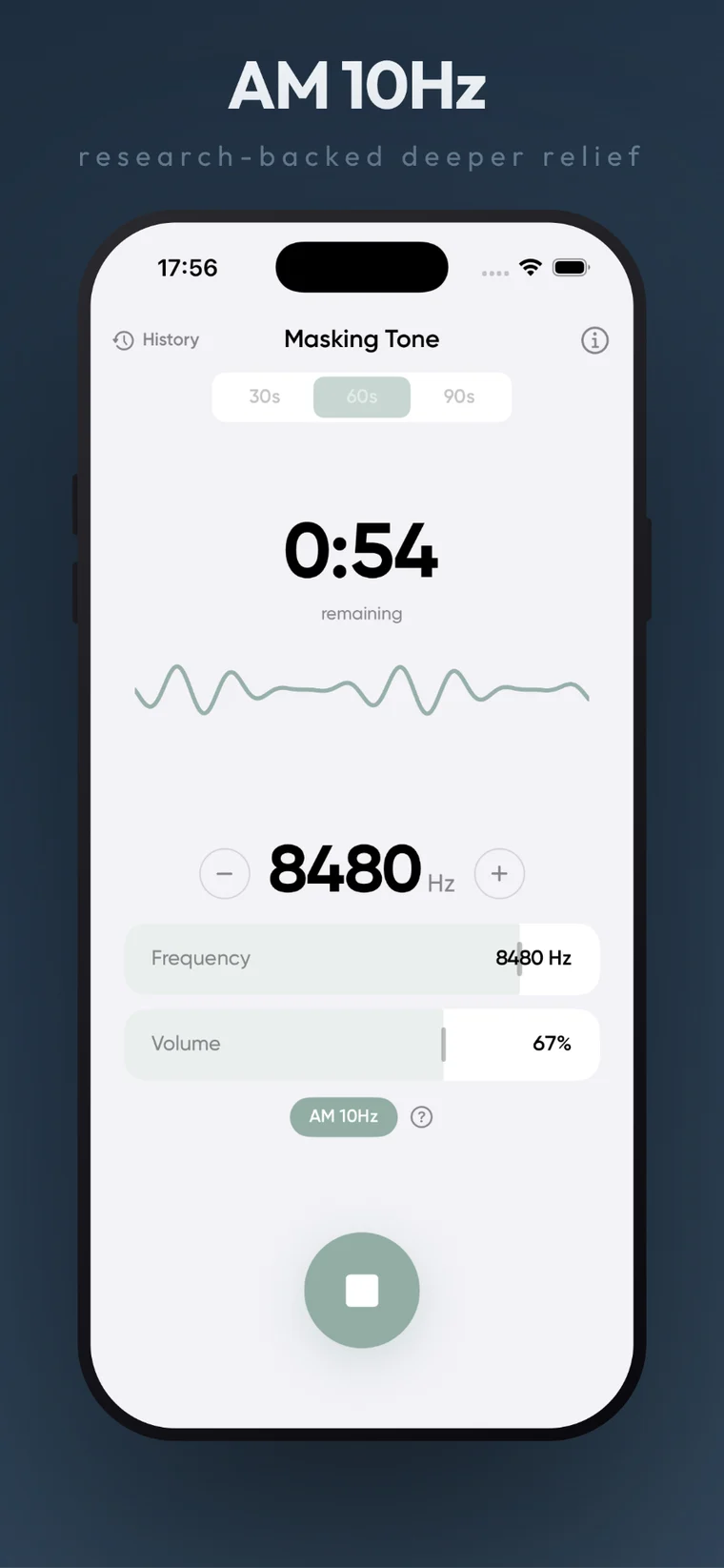
AM 10 Hz modulation
An optional pulsing mode. Small studies suggest it may suit some people better than a steady tone.
How it works
A protocol you can keep, in three steps.
- 01
Find your tone
Adjust frequency until the masking tone sits over the ringing you hear.
- 02
Choose a session
Pick 30, 60, or 90 seconds. Add AM 10 Hz modulation if it helps.
- 03
Track what helps
After each session, mark whether your tinnitus went silent, got quieter, or didn't change.
AM 10 Hz
Steady or pulsing: compare for yourself.
Studies suggest a tone that pulses ten times a second may suit some people better than a steady one. Switch it on per session and let your own results decide.
Session history
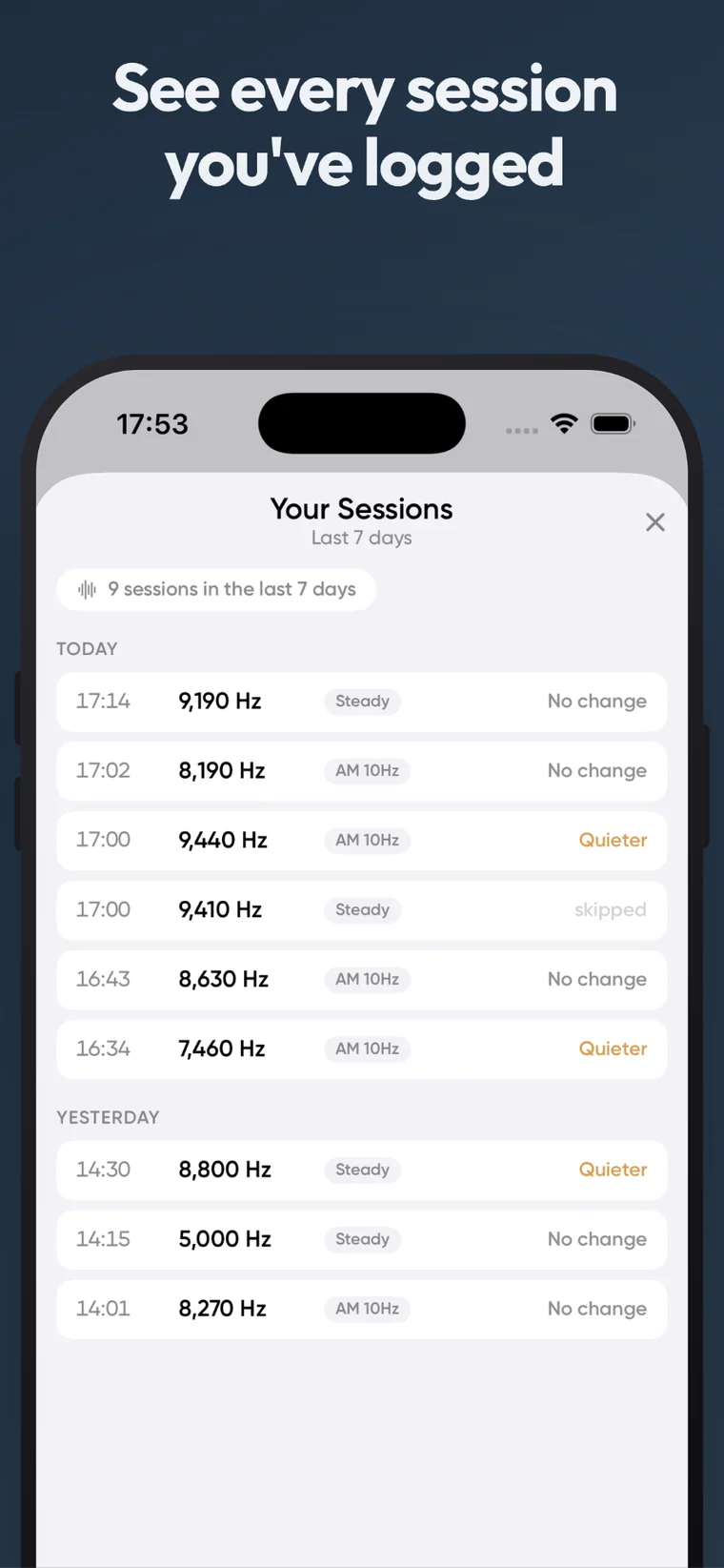
See every session you've logged.
Every tone, mode, and outcome is captured locally on your device — a quiet diary you can review at your own pace.
Mode comparison
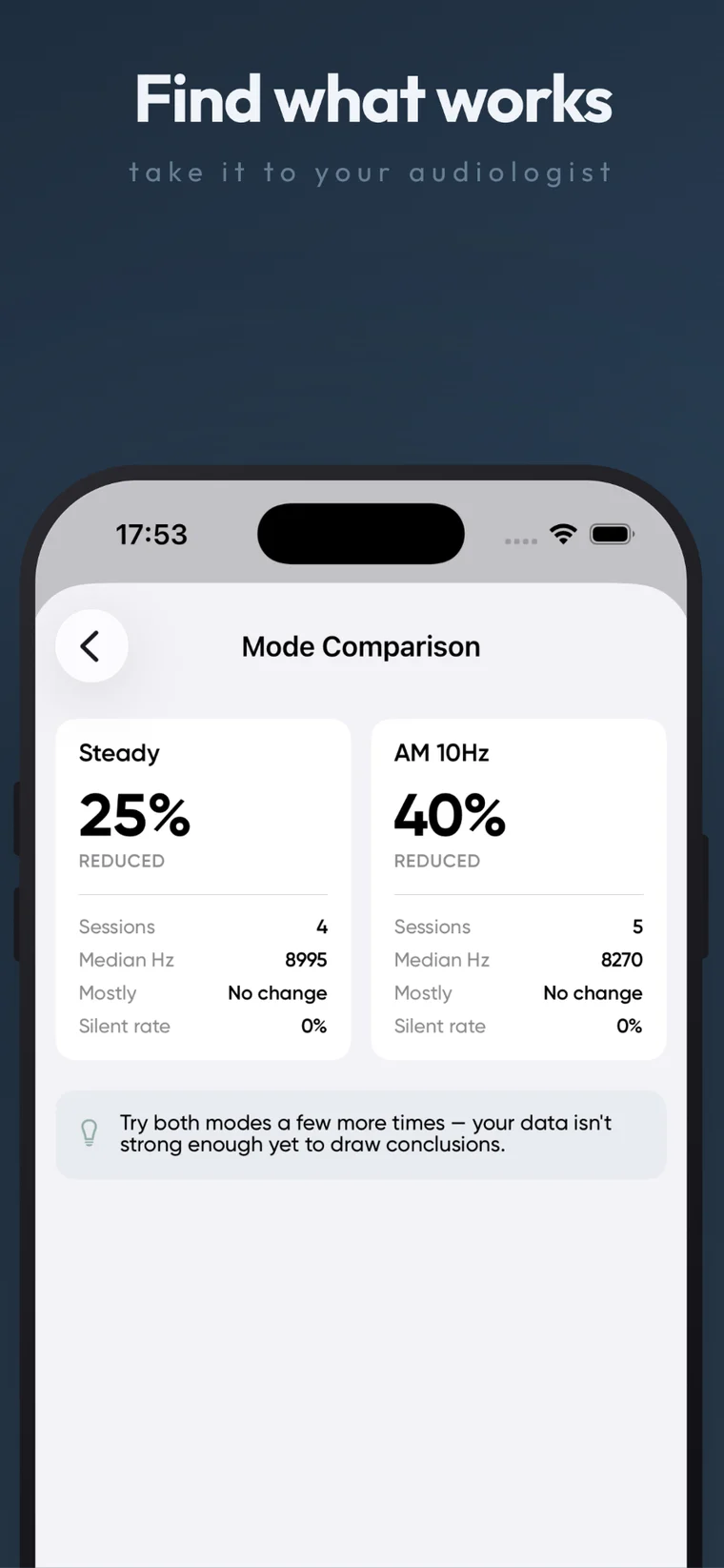
Find what actually works.
Compare Steady against AM 10 Hz side by side. Bring the numbers to your next audiology appointment.
Trends
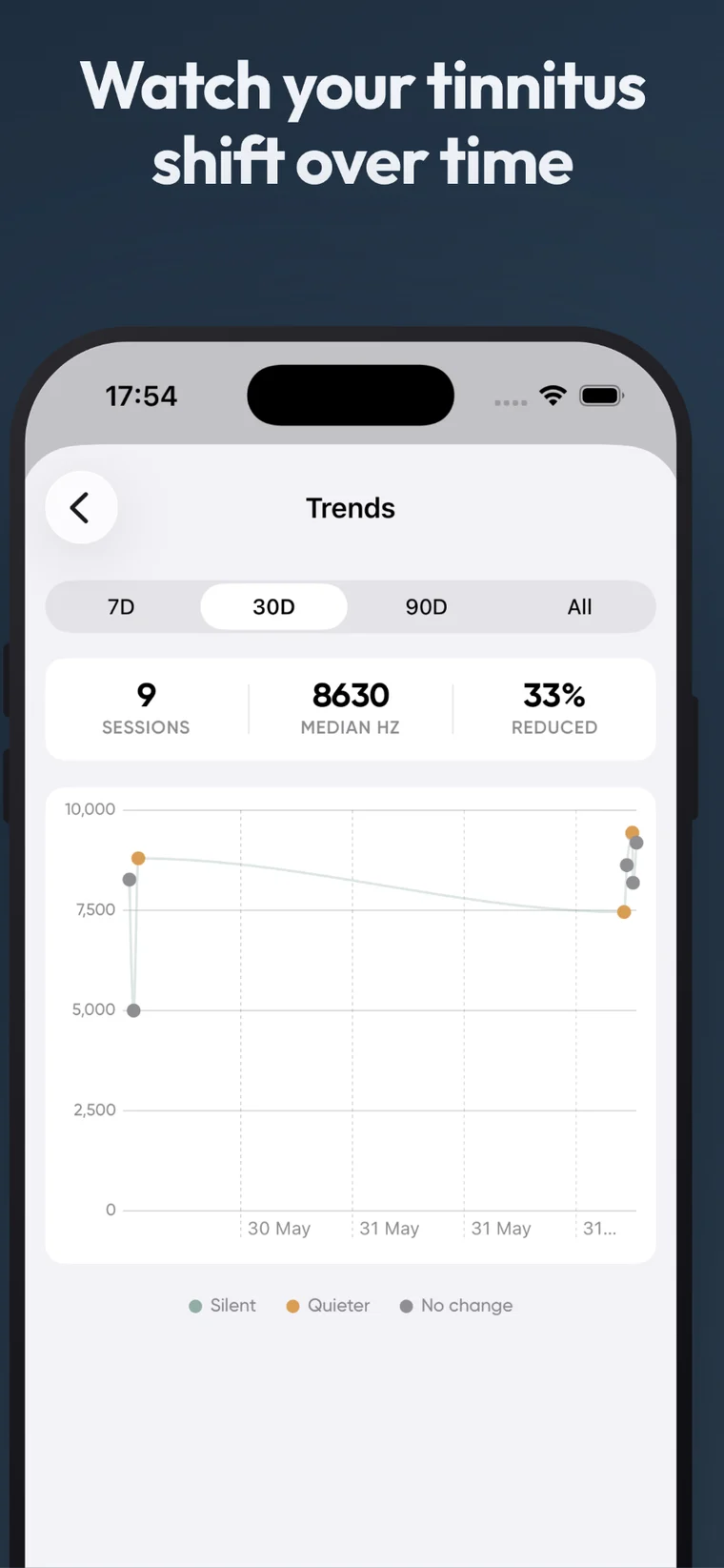
Watch your tinnitus shift over time.
7, 30, 90 day or all-time views. Median frequency, reduction rate, and the pattern of relief — visualised, not buried.
Evidence
What the research says.
Quiet after the tone
After listening to a sound matched to the pitch of their tinnitus, many people notice it goes quieter for a while once the sound stops. Researchers call this residual inhibition. It usually lasts from seconds to a few minutes, and it doesn't happen for everyone: in one pooled analysis of two lab studies, about a quarter of participants had their tinnitus drop by half or more.
Steady or pulsing
In small lab studies at the University of Regensburg, tones pulsing ten times a second at the tinnitus pitch suppressed tinnitus more than noise did, and at least as well as a steady tone, with a trend towards more. Participants also found them more pleasant to listen to.
Your own results
Results vary from person to person, so Masking Tone helps you find what works for you, and keeps a record you can show your audiologist.
Sources
- Neff et al. (2017). 10 Hz amplitude modulated sounds induce short-term tinnitus suppression. Frontiers in Aging Neuroscience.
- Neff et al. (2019). Comparison of amplitude modulated sounds and pure tones at the tinnitus frequency. Trends in Hearing.
- Hafner et al. (2020). Impact of personality on acoustic tinnitus suppression and emotional reaction to stimuli sounds. Progress in Brain Research.
A note on care
Masking Tone is a sound-therapy tool, not a medical device, diagnosis, or cure. Tinnitus has many causes — if it is new, persistent, or accompanied by hearing loss, please see an audiologist or physician. We built this app to sit alongside that care, not replace it.
FAQ
Honest answers.
Start with a
quiet minute.
Free to download. No account required. Your sessions stay on your phone.
Tone Journal, a one-time purchase with no subscription, unlocks your full history, trends, mode comparison and an audiologist-friendly PDF.